


There Were Enough Chairs
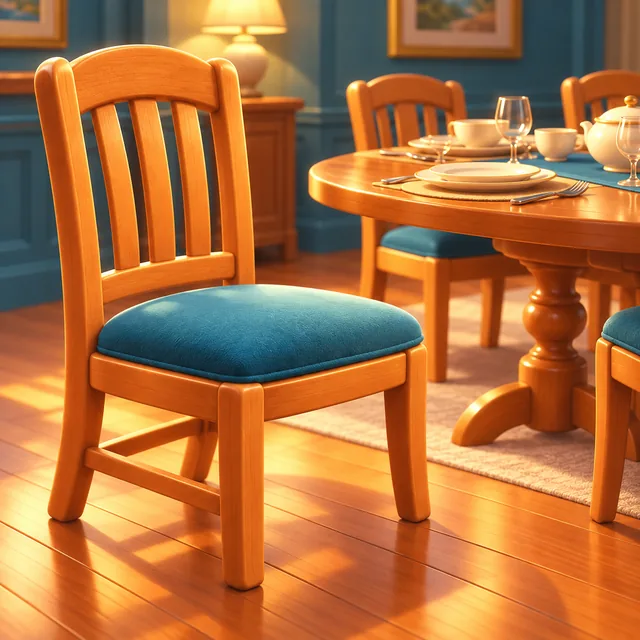
A restaurant server placed chairs around a table, one for each person in a reservation.
There should now have been a seat for everyone.
But with the chairs as they were, not everyone could sit at the same table. Once the server removed one chair, everyone could sit down and begin their meal.
The number of people in the reservation had not changed.
Why did one chair need to be removed?
Question your assumptions, one by one.
Ask the AI your own questions and uncover the truth behind the mystery.
View Hints
Hints
Use as many hints as you need, one at a time.
Hint 1
Removing a chair does not necessarily mean removing a place for someone to eat.
Hint 2
The problem concerned not just the number of chairs, but also the space around the table.
Hint 3
One of the guests did not use a chair provided by the server.
Hint 4
That guest used the space left when the chair was removed.
Hint 5
That guest was already in a seated position without using a restaurant chair.
Hint 6
That guest came up to the table without moving out of what they were already sitting in.
Hint 7
That guest eats while remaining in a wheelchair. Removing the unused restaurant chair makes room for the wheelchair at the table.
Check the Answer
Answer
To make room at the table for a guest who would eat while seated in their wheelchair.
That guest would not use one of the chairs the server had set out. Even with one chair removed, there were enough for the other guests. The wheelchair could fit into the space left open, allowing everyone to sit together at the same table.
Explanation
When we hear that everyone will sit down, we tend to assume that everyone will sit in a restaurant chair. But the number of diners and the number of chairs the restaurant needs to provide are not necessarily the same.
To sit at a table, a person needs not only something to sit on, but also space to fit into. If an unused chair occupies that space, having a chair for everyone can actually get in the way. What was missing was not another chair, but room at the table.
For example: “Does everyone need to use one of the restaurant’s chairs?” — “No.” “Does removing a chair make room for one of the guests?” — “Yes.” The useful distinction is between counting chairs and providing the space each guest needs to sit at the table.
If the solution makes sense to you, add your vote. One vote per browser.